Evaluating the potential consequences of climate change for Caspian seals and ecosystem services in the Caspian Sea
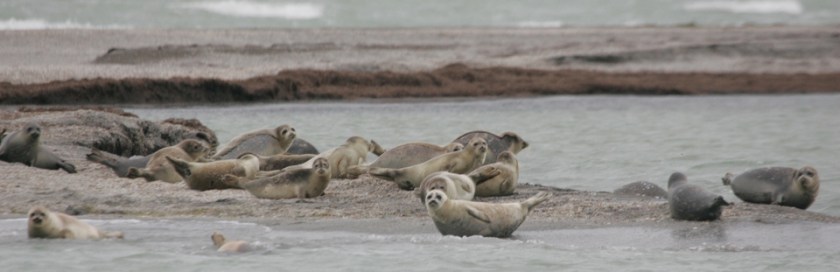
Marine mammals are keystone species for marine ecosystems. Understanding how they could be impacted by climate change is important for evaluating risks to marine biodiversity, ecosystem function and ecosystem services. The Caspian seal (Pusa caspica), is endemic to the Caspian Sea in Central Asia, the largest landlocked waterbody on the planet. Recent global risk assessments suggest the Caspian seal may have the greatest vulnerability to climate change of any marine mammal species, due to loss of its sea ice breeding habitat and decline of the Caspian Sea level. However, an in depth assessment of potential threats and impacts of climate heating on Caspian seals based on detailed knowledge of species ecology and biology remains to be conducted. Such an assessment is not only critical for informing conservation strategy for Caspian seals, but will also be relevant to wider understanding of risks to biodiversity, ecosystem services and for human populations of the Caspian Sea region more generally.
In this project we will use an existing satellite telemetry dataset (Dmitrieva et al. 2016) from more than 100 tags deployed between 2009 and 2018 to describe Caspian seal habitat use and activity budgets (time investment in foraging/diving and resting activity) in relation to environmental drivers. We will investigate both use of winter sea ice breeding habitat, and evaluate the effects of high sea surface temperatures on seal behaviour, and how this relates to risks for thermal stress in the summer months.
Secondly will also evaluate the impact of Caspian Sea level decline (predicted to be up to 18m by 2100), on the availability of Caspian seal breeding habitat. Finally we will use the Marxan package to identify spatial planning solutions for seal marine protected areas under current conditions and human activity, and future sea level decline scenarios.
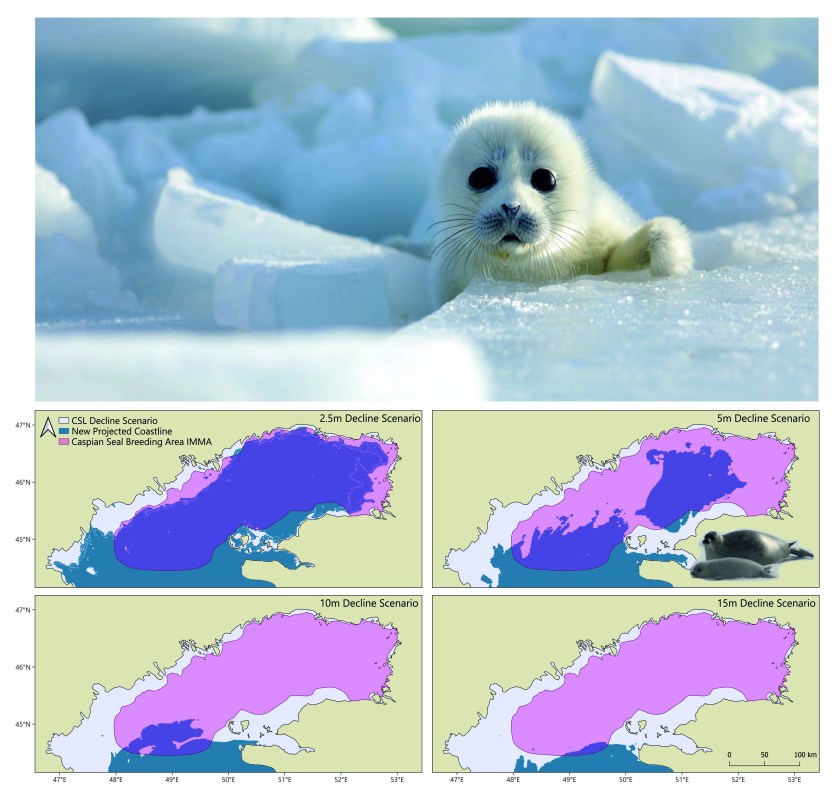
Ultimately the project could act as template for climate impact risk assessments for marine mammals more generally, and will provide important policy relevant information on managing Caspian Sea biodiversity during the coming Century.
PhD funding & eligibility
For PhDs, a variety of competitive scholarships are available which support UK home rated students (UK citizens, and those satisfying relevant UK residency criteria), for example the Leeds Doctoral Scholarship. Alternatively we can consider overseas students supported by external scholarships, or self-funded home and overseas students.
How to apply: Applications will be made via the Faculty of Biological Sciences Graduate School Portal (https://biologicalsciences.leeds.ac.uk/research-degrees), but it is essential that you email me (s.j.goodman@leeds.ac.uk) before submitting an application.
Application deadlines: Various, from 7th January 2026
Post-doctoral fellowships
I am also happy to hear from post-doctoral candidates seeking to develop independent fellowships (e.g. Marie-Curie fellowships) to work in this research area at the University of Leeds. Please contact me to discuss proposal ideas and potential funding opportunities.
Relevant references
Court R, Lattuada M, Shumeyko N, Baimukanov M, Eybatov T, Kaidarova A, Mamedov EV, Rustamov E, Tasmagambetova A, Prange M, Wilke T, Hassall C, Goodman SJ (2025). Rapid decline of Caspian Sea level threatens ecosystem integrity, biodiversity protection, and human infrastructure. Commun Earth Environ 6, 261. https://doi.org/10.1038/s43247-025-02212-5
Albouy, C., Delattre, V., Donati, G. et al. Global vulnerability of marine mammals to global warming. Sci Rep 10, 548 (2020). https://doi.org/10.1038/s41598-019-57280-3
Dmitrieva, L., Jüssi, M., Jüssi, I., Kasymbekov, Y., Verevkin, M., Baimukanov, M., Wilson, S., & Goodman, S. J. (2016) Individual variation in seasonal movements and foraging strategies of a land-locked, ice-breeding pinniped. Marine Ecology Progress Series, 554:241-256. doi: 10.3354/meps11804.
Prange, M., Wilke, T. & Wesselingh, F.P. The other side of sea level change. Commun Earth Environ 1, 69 (2020). https://doi.org/10.1038/s43247-020-00075-6
Wilson, S. C., Dolgova, E., Trukhanova, I., Dmitrieva, L., Crawford, I., Baimukanov, M., Goodman, S. J. (2017). Breeding behavior and pup development of the Caspian seal, Pusa caspica. Journal of Mammalogy, 98(1):143–153, doi: 10.1093/jmammal/gyw176.
 Goodman Ecology & Evolution Lab @Leeds